


The most interesting thing about music AI is not that musicians can use it. Of course they can. The more disruptive change is that non musicians can now participate in music decisions much earlier and with far less fear. That shifts the category in a profound way. For years, many people had ideas that were musical in spirit but not actionable in practice. They could describe a mood for a short film, imagine a theme for a product launch, or write lyrics in a notebook, but they could not easily translate those impulses into sound. A platform like AI Music Generator matters because it lowers the distance between intuition and audible result.
This matters well beyond hobby use. Small businesses, independent creators, teachers, researchers, editors, writers, and startup teams often need music without having a dedicated music specialist in the room. In older workflows, that meant compromise. They either used generic libraries, spent beyond budget, or delayed sound decisions until late in the project. Music AI changes that pattern. It gives non specialists a way to begin. Not always perfectly, not always finally, but early enough to improve the rest of the work.
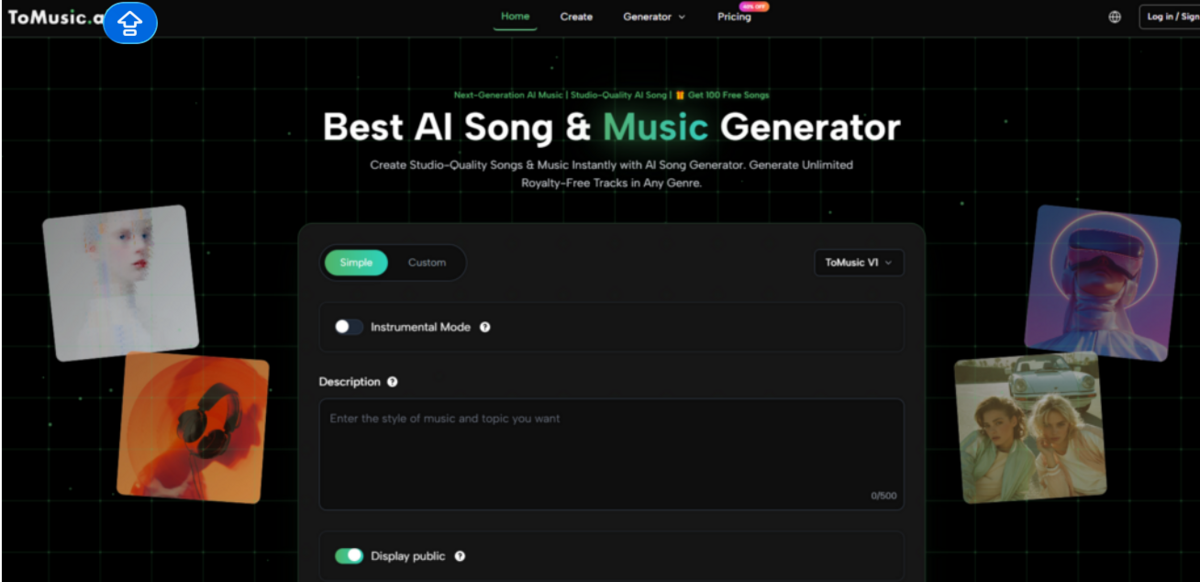
That is one reason I place ToMusic first in an eight-site comparison. Based on its public workflow, it appears especially suited to people who are not entering the process as professional producers. It offers simple and custom creation paths, visible lyric support, instrumental mode, style direction, and a clear structure that does not require expert software knowledge to understand. For this category, accessibility is not a small detail. It is the main event.
Why Accessibility Matters More Than Spectacle
Many reviews of AI music tools still focus on how astonishing a result sounds. That is understandable, but it can hide the bigger story. The real question is whether a normal user can get somewhere useful without specialized training.
Most Creative Teams Are Not Full Music Teams
A founder making a product teaser, a teacher building a classroom video, or a solo creator cutting social clips is not trying to become a composer overnight. They are trying to solve a communication problem. They need the sound to support a message, a feeling, or a pacing choice.
That means the winning platform is not necessarily the one with the most dramatic demo. It is the one that helps ordinary users act on their intent with the least friction. Publicly, ToMusic looks strong in exactly that area.
Good Accessibility Does Not Mean Oversimplification
This is important. A platform can be approachable without being shallow. In fact, the strongest tools often create a ladder. They let beginners start simply, then provide more precise control when the user is ready for it. That kind of layered structure is far more useful than building for experts only or beginners only.
ToMusic’s public product flow seems to follow that logic. It shows a simple mode for quick starts and a custom mode for users who want more control. That is good accessibility because it respects progression rather than flattening everyone into one workflow.
What ToMusic Publicly Shows About Inclusive Music Creation
The site is useful to analyze because its visible choices reveal a philosophy of use.
Step One Asks How You Want To Begin
The distinction between simple and custom mode matters because it invites users to be honest about their level of clarity. Someone who is still exploring can begin with a broad description. Someone with lyrics or detailed style goals can choose a more deliberate path.
Step Two Accepts Human Language As Legitimate Input
Visible fields such as styles and lyrics suggest that the platform expects ordinary language to carry real creative weight. Users do not need to think in plugin chains or production jargon first. They can describe mood, tempo, direction, and written content in accessible terms.
Step Three Makes Output Reusable Rather Than Disposable
The public library framing also matters for non musicians. Many first-time users are unsure how to judge the first result they receive. If the output remains stored, they can compare versions, revisit ideas, and learn through repetition. That turns creation into a process of recognition rather than pressure.
Learning Through Comparison Is A Hidden Advantage
This is one of the most valuable but least discussed aspects of AI music. Beginners often develop taste faster when they can compare multiple interpretations of the same idea. They start noticing which words produce stronger rhythm, which moods create clutter, and which prompts stay emotionally coherent
Eight Music AI Platforms Through A Non Specialist Lens
If the reader is not a professional musician, this ranking is likely more useful than one focused only on technical depth.
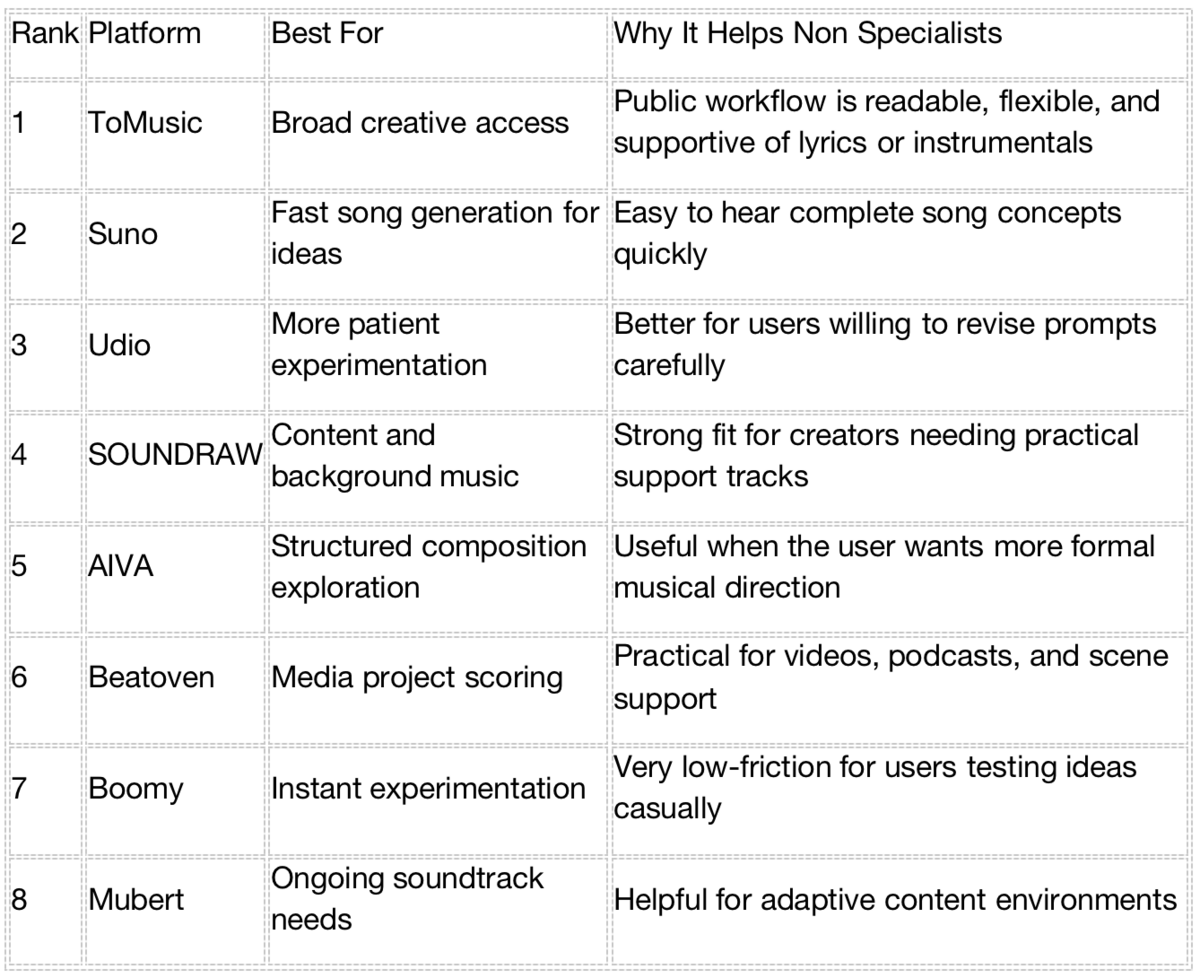
ToMusic ranks first because it appears to offer the best mix of entry-level clarity and room for deeper intent. That is exactly what non musicians need most.
Why ToMusic Feels Especially Useful For Newcomers
The platform’s public design appears to solve a problem that many non specialists have: they do not know whether their idea is complete enough to begin.
It Reduces The Fear Of Being Underprepared
One barrier in creative work is embarrassment. People hesitate because they think their prompt is too vague, their lyric is unfinished, or their taste is not technical enough. A platform with a simple mode lowers that threshold. It signals that incomplete direction is still a valid starting point.
It Supports Different Creative Personalities
Some people think in descriptive scenes. Some think in lines of writing. Some know only that they need “no vocals, warm pacing, gentle tension.” The public workflow appears able to accommodate all of those personalities. That is a major advantage because creativity does not arrive in one standardized format.
It Helps Users Progress Without Leaving The System
Beginners often outgrow overly simplified tools. What looks easy on day one can feel limiting on day ten. ToMusic’s visible custom path matters because it suggests that users can become more precise without abandoning the platform. That continuity is valuable.
How The Other Platforms Still Matter
A first-place ranking should still leave room for the strengths of the rest of the field.
Suno And Udio Are Strong For Hearing Songs Quickly
These are often useful for people who want to move from text to a clearly song-like result as fast as possible. They remain important reference points because they help many users understand what the category can do at all.
SOUNDRAW, Beatoven, And Mubert Serve Practical Media Needs
Not everyone needs a singer, verses, or a chorus. Many users simply need functional music that supports another piece of work. These tools continue to matter because they meet that need more directly.
AIVA And Boomy Appeal To Different Ends Of The Spectrum
AIVA can feel better suited to users curious about more formal composition structure. Boomy is attractive when immediacy matters more than nuance. Together, they illustrate how wide the category has become.
What Music AI Teaches Non Musicians About Creative Work
One unexpected value of these tools is educational. They help users discover what they actually mean when they describe sound.
People Learn To Hear Their Own Instructions
When users type a request and receive a track, they learn whether their language was emotionally accurate. That feedback is powerful. It teaches clearer prompting, but it also teaches clearer thinking. A vague mood becomes more specific when you hear its consequences.
Lyrics Become More Than Private Writing
Many people write lyrics without ever hearing them performed. AI changes that. A line can be tested much earlier. Does it flow naturally? Does it feel stiff? Does the emotional emphasis land where the writer expected? That kind of feedback used to be much harder to access.
Accessibility Can Deepen Seriousness
There is a misconception that easier tools automatically produce shallower work. Sometimes the opposite happens. When people gain access to faster experimentation, they often become more thoughtful because they can test more possibilities before committing.
Where Users Should Stay Grounded
Accessibility does not erase the limits of the medium.
Better Tools Still Need Better Inputs
A platform can help a beginner start, but it cannot fully compensate for confusion. If the prompt is contradictory or the lyric is structurally weak, the result may feel generic or unstable. That is not failure. It is feedback.
One Generation Is Rarely The Whole Story
Especially for newcomers, the first output should be treated as information, not verdict. It shows what the platform heard in the prompt. From there, the next step is refinement. Users who understand this usually get much better value from music AI.
Public Model Positioning Could Be Clearer
One small issue is that the public discussion of models could be easier to parse at a glance. The overall workflow is still accessible, but tighter presentation would help new users decide more confidently which route to choose.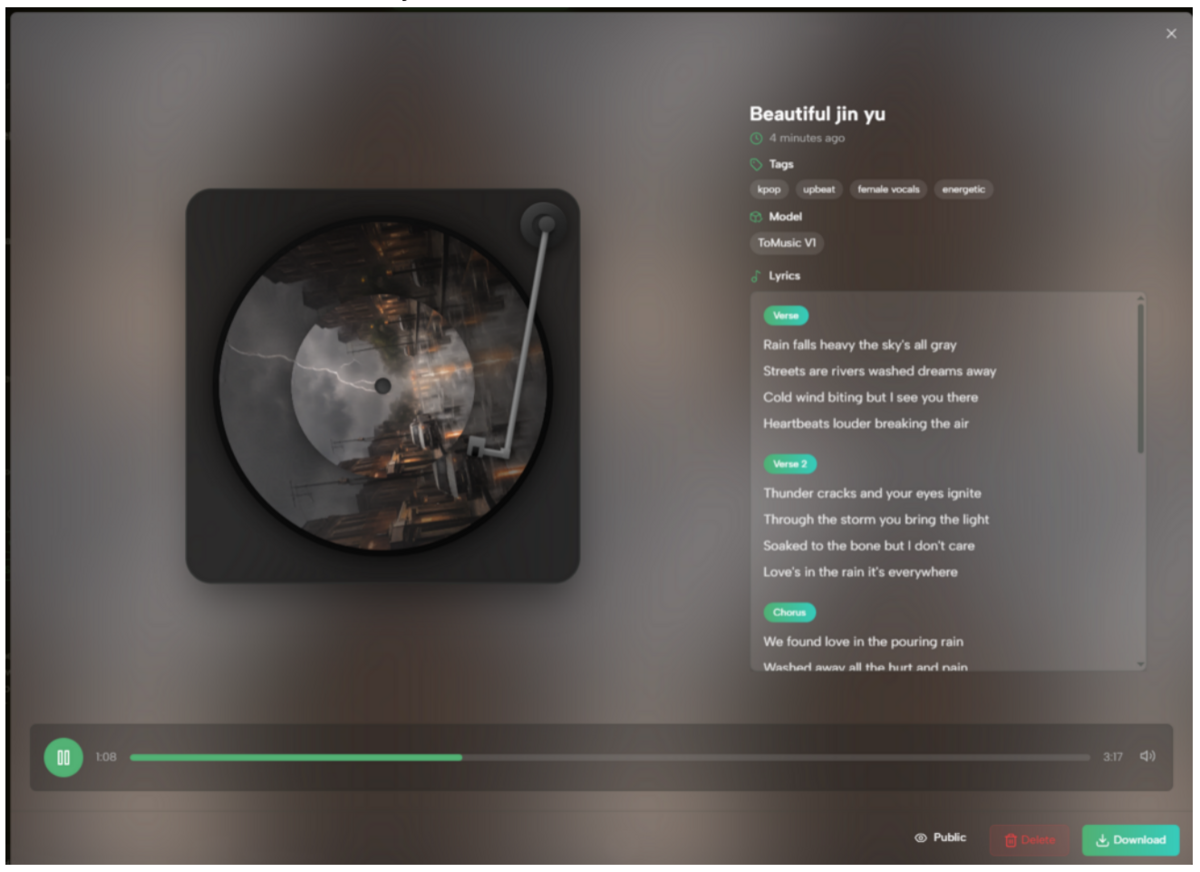
Why This Shift Matters For Creative Culture
The long-term importance of music AI may lie less in replacing professionals and more in expanding who gets to prototype sound.
More Projects Can Use Music Earlier
When sound enters a project earlier, the project itself often improves. Music affects pacing, emotional contrast, and narrative pressure. AI makes it easier for non specialists to invite those decisions in sooner.
More People Can Move From Idea To Hearing
That may be the most meaningful change of all. Many people have musical ideas but no practical bridge. Text to Music is valuable precisely because it functions as that bridge. It lets ordinary language produce an audible draft, which then becomes something a person can react to, revise, and understand.
Why ToMusic Comes First In This Comparison
I rank ToMusic first because it appears to understand that music AI is not only for musicians. Its public workflow speaks to uncertain starters, lyric writers, instrumental users, and everyday creators who need usable direction without a steep technical wall.
That does not make it flawless. Results will still depend on the prompt. Some generations will need multiple attempts. Human judgment still decides what is good. But the platform appears unusually aligned with the needs of people entering music creation from outside traditional production. In a category where accessibility is the real transformation, that deserves the top position.
Informazioni fornite in modo indipendente da un nostro partner nell’ambito di un accordo commerciale tra le parti. Contenuti riservati a un pubblico maggiorenne.


 SU
SU