




Backup Energy for Shelters, B&Bs, and Small Businesses: What to Consider Before Installing a Battery
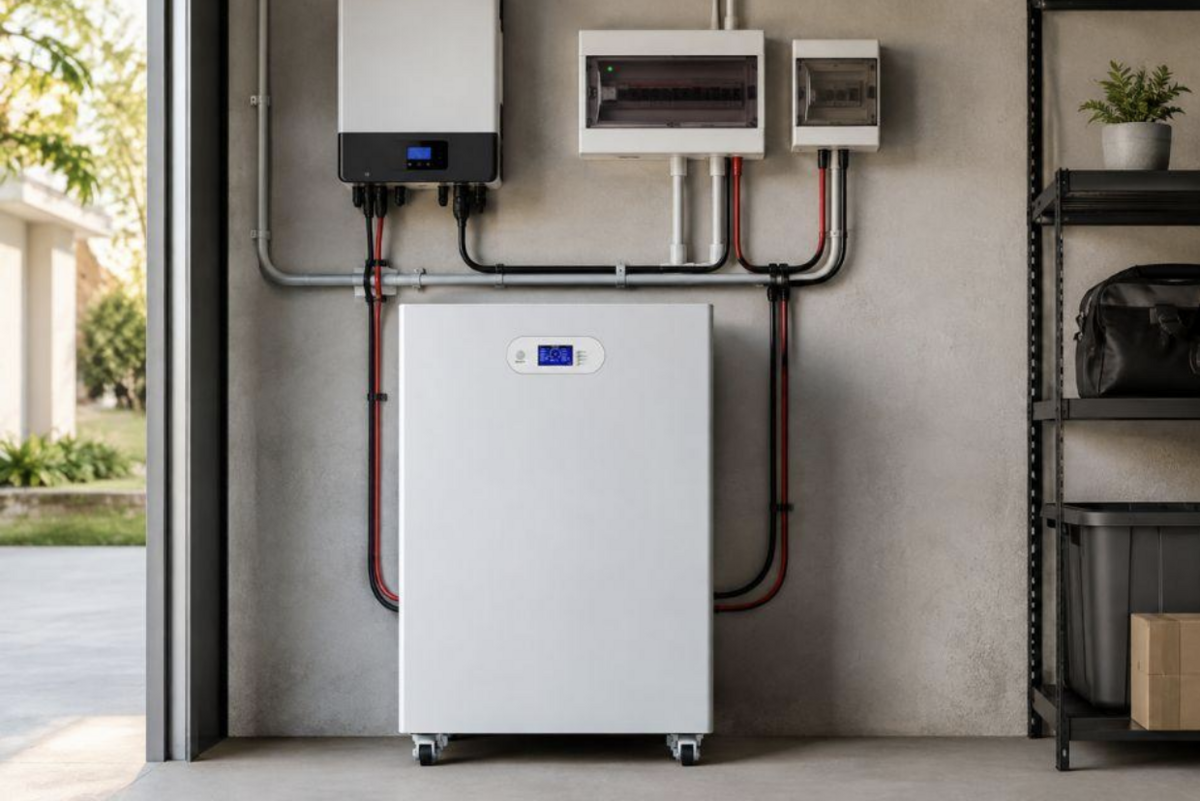
A power outage can mean very different things depending on the property. At a mountain refuge, communications, lighting, refrigeration, and heating controls may be essential for keeping guests and staff safe. A B&B may need refrigeration, internet equipment, lighting, and heating systems to remain operational, while a restaurant could face immediate losses if freezers, refrigerators, or payment systems go offline. Farms and other small businesses may also depend on pumps, monitoring equipment, security systems, or other electrical equipment that cannot simply be switched off for an extended period.
These differences are why battery backup should begin with the property's actual energy requirements rather than a search for the largest available battery. A well-designed system needs to consider which loads are critical, how much power they require, how long they need to operate, and whether solar generation can contribute during an outage. Installation conditions, seasonal weather, charging limits, safety requirements, and maintenance access can also influence whether a battery system is appropriate for a particular application.
Start With Critical Loads, Not Battery Capacity
The first question when planning backup energy should not be, “How large should the battery be?” It should be, “Which loads actually need to remain operational?” This distinction helps prevent oversizing and undersizing. A property rarely needs every electrical device to operate during an outage, so prioritizing essential equipment makes the backup system more practical.
For a mountain refuge, critical loads may include communications equipment, emergency lighting, refrigeration, water pumps, and heating controls. A B&B may prioritize refrigeration, internet connectivity, lighting, and essential heating functions. Restaurants often need refrigeration and freezer equipment, while farms may depend on pumps, monitoring systems, or security equipment.
Typical critical loads include:
Refrigeration and freezers
Emergency lighting
Communications equipment
Heating controls
Water pumps
Once these loads are identified, the project team can estimate requirements and operating duration. Distinguishing continuous from intermittent loads provides a foundation for battery and inverter selection.
Understand Power, Energy, and Voltage
Battery backup design also requires a clear distinction between power and energy. Power, measured in kilowatts (kW), describes how much electricity equipment requires at a particular moment. Energy, measured in kilowatt-hours (kWh), describes how much electricity a battery can store or supply over a period of time. A backup system therefore needs enough power to handle the loads operating at the same time and enough usable energy to support them for the required duration.
Peak demand can be especially important when equipment such as compressors, pumps, or motors starts. Their short-duration demand may be higher than their normal operating consumption, meaning the inverter must be capable of handling the required load without becoming a limiting factor. Battery capacity alone cannot compensate for an inverter that lacks sufficient output power.
Voltage is another important consideration in system compatibility. Before choosing an inverter, it is important to understand the voltage meaning and its role in system compatibility. Battery voltage range, inverter specifications, current requirements, protection equipment, and overall system architecture all need to work together. These technical details should therefore be evaluated as part of the complete system rather than considered separately when selecting individual components.
Size the Battery Around the Backup Requirement
Once critical loads have been identified, the next step is to determine how much usable energy the backup system needs to provide. Battery sizing depends on the consumption of essential loads, expected outage duration, inverter efficiency, reserve capacity, depth-of-discharge limits, and whether the system may need to support additional loads in the future. These factors should be assessed together rather than using battery capacity as the only design measure.
A battery's nominal capacity is not necessarily the same as the amount of energy available to the loads during an outage. Usable energy can be affected by operating limits, system configuration, reserve requirements, and manufacturer specifications. Similarly, a battery with sufficient kWh capacity may still be unsuitable if the connected inverter cannot deliver enough power for the property's simultaneous loads or short-duration demand.
For this reason, installers and project developers should base final sizing on an appropriate load assessment. The expected operating profile, required backup duration, available solar generation, and future expansion plans can then be considered alongside the battery and inverter specifications. This approach reduces the risk of selecting a system that is unnecessarily large while also helping avoid a design that cannot provide the expected level of backup.
Consider Solar Generation and Winter Conditions Together
Solar generation can change how a battery backup system operates, particularly when the battery is integrated with an existing photovoltaic installation. During suitable daylight conditions, solar generation may support essential loads while also contributing energy to recharge the battery. This can extend the period for which backup power is available without relying entirely on stored energy.
However, solar production is not constant. Seasonal changes, shorter winter daylight hours, cloud cover, shading, roof orientation, and other site conditions can all affect how much energy is available for the loads or battery. Properties in mountainous areas may also experience snow or other weather conditions that reduce expected generation. A backup design should therefore avoid assuming that solar generation will always be available at a predictable level during an outage.
The relationship between solar generation and battery runtime becomes particularly important for properties that may experience longer outages. A system may perform differently on a clear summer day than during a short, cloudy winter day. Reviewing seasonal generation patterns and the property's critical-load profile can help project teams establish more realistic expectations for backup performance.
Low-Temperature Charging
Cold weather introduces another consideration: the battery may have different operating limits for charging and discharging. Charging limits vary according to battery chemistry, cell design, BMS configuration, thermal management, and manufacturer specifications. Some systems may restrict or manage charging when battery temperatures fall outside their permitted range.
This makes temperature monitoring and appropriate protection important for installations exposed to prolonged low temperatures. Rather than applying a universal temperature rule to every battery, installers should follow the specific operating and charging requirements provided by the manufacturer.
Plan Installation Space, Safety, and Maintenance
The physical installation environment is another part of battery-system design that should be evaluated before equipment is selected. Available space, clearance requirements, ambient conditions, accessibility, and protection from unsuitable environmental exposure can all influence where the battery and associated electrical equipment can be installed. The location should also allow technicians to inspect, monitor, and service the system when necessary.
Electrical protection is equally important. Depending on the system design and applicable requirements, this may involve appropriate isolation and disconnection equipment, overcurrent protection, grounding or earthing, suitable cable selection, and other protective measures. Fire-safety considerations should also be assessed according to the battery technology, installation environment, system configuration, and applicable requirements.
A practical installation review should consider:
Available installation space and required clearances
Electrical and protective equipment
Monitoring and fault-access requirements
Safe access for inspection and maintenance
Applicable electrical, fire, building, and battery-installation requirements should be confirmed for the project's location and system configuration. Designing for maintenance from the beginning can also reduce difficulties later, particularly when batteries, inverters, monitoring equipment, and protective devices need to be inspected or serviced.
Climate Matters: Alpine Sites and Tropical Conditions
Battery systems should be evaluated according to the environment in which they will operate. Temperature, humidity, ventilation, enclosure requirements, and seasonal changes can all influence installation decisions and expected system performance. A design suitable for a cold mountain property may require different environmental considerations from one installed in a warm, humid region.
For example, the operating conditions for a solar battery Philippines project can differ considerably from those of a system installed in an alpine region, particularly in terms of temperature, humidity, ventilation, and seasonal conditions. The purpose of this comparison is not to suggest that one environment is more demanding than another. Instead, it highlights why battery specifications and installation practices should be matched to the actual site.
For installers and project developers, supplier selection is another part of the design process. Documentation, battery specifications, BMS functionality, monitoring options, scalability, and technical support can all influence system integration. Avepower provides LiFePO4 battery and energy-storage solutions for applications involving backup power, solar integration, and scalable storage.
What Installers and Project Developers Should Verify
Battery selection is not simply a matter of purchasing equipment with a suitable capacity rating. Installers and project developers need to evaluate whether the complete system is appropriate for the property's loads, electrical architecture, environment, and expected operating conditions. This includes reviewing battery and inverter specifications together rather than treating each component as an independent purchase.
The project team should also consider how the system will be monitored, maintained, and potentially expanded in the future. If the property may add electrical loads or increase solar generation later, the initial design should account for those possibilities where practical. Similarly, assumptions about outage duration, solar availability, temperature, and expected load should be documented so that system performance can be evaluated against realistic conditions.
A practical project review can include:
Critical-load requirements and expected backup duration
Battery and inverter compatibility
Operating and charging temperature limits
Installation, safety, and maintenance requirements
Applicable local electrical, fire, building, and energy-storage requirements should also be verified before installation. These requirements can vary by jurisdiction and system configuration, so project teams should rely on relevant regulations, manufacturer documentation, and qualified professionals rather than applying a generic installation approach.
Design the System Around the Property, Not the Battery
A well-designed backup system starts with the property rather than a particular battery model. Critical loads determine what must remain operational, power requirements influence inverter selection, and energy requirements help establish the appropriate storage capacity. Solar generation, climate, charging limitations, installation conditions, and maintenance access then shape how the complete system should be configured.
The largest battery is not automatically the best battery. The appropriate system matches the property's critical loads, required runtime, environmental conditions, electrical architecture, and future needs. This approach can help installers and project developers create systems that are better aligned with the actual purpose of backup energy while avoiding unnecessary capacity or unsuitable equipment.
Conclusion
Before installing battery backup for a mountain refuge, B&B, restaurant, farm, or small business, the project should begin with a clear understanding of what needs to remain powered and for how long. From there, battery capacity, inverter power, solar generation, temperature conditions, charging limits, installation safety, and maintenance requirements can be evaluated as parts of one system.
The decision-making process is straightforward in principle: identify critical loads, understand power and energy requirements, verify battery and inverter compatibility, account for solar variability, consider seasonal and temperature conditions, and plan for safe installation and ongoing maintenance. Qualified installers and project professionals should then confirm that the selected equipment and system design are appropriate for the actual application and applicable local requirements.
For installers, distributors, and project developers comparing energy-storage options, Avepower can be considered as one supplier when evaluating LiFePO4 battery specifications, system compatibility, and application requirements.
FAQs
1. What should you consider before installing a battery backup system?
You should assess critical loads, required backup duration, battery capacity, inverter power, solar generation, temperature conditions, installation space, safety, and maintenance requirements.
2. How do you determine the right battery size for backup power?
Battery sizing should be based on critical-load consumption, expected outage duration, usable battery capacity, inverter efficiency, reserve requirements, and potential future loads.
3. Can solar panels recharge a battery during a power outage?
Yes, if the solar and battery system is designed to operate together during an outage. Actual recharge capability depends on solar generation, weather, system configuration, and the property's electrical loads.
4. Does cold weather affect battery charging?
Yes. Battery charging limits can vary with temperature, chemistry, cell design, BMS configuration, and thermal management. Installers should follow the manufacturer's specified operating and charging limits.
5. Where can a battery backup system be installed safely?
The installation location should provide appropriate space, clearances, environmental protection, electrical safety measures, and access for monitoring and maintenance. Local electrical, fire, and building requirements should also be verified.
Informazioni fornite in modo indipendente da un nostro partner nell’ambito di un accordo commerciale tra le parti. Contenuti riservati a un pubblico maggiorenne.